Ancient DNA ancestry from your raw data
Free · Ancestry report
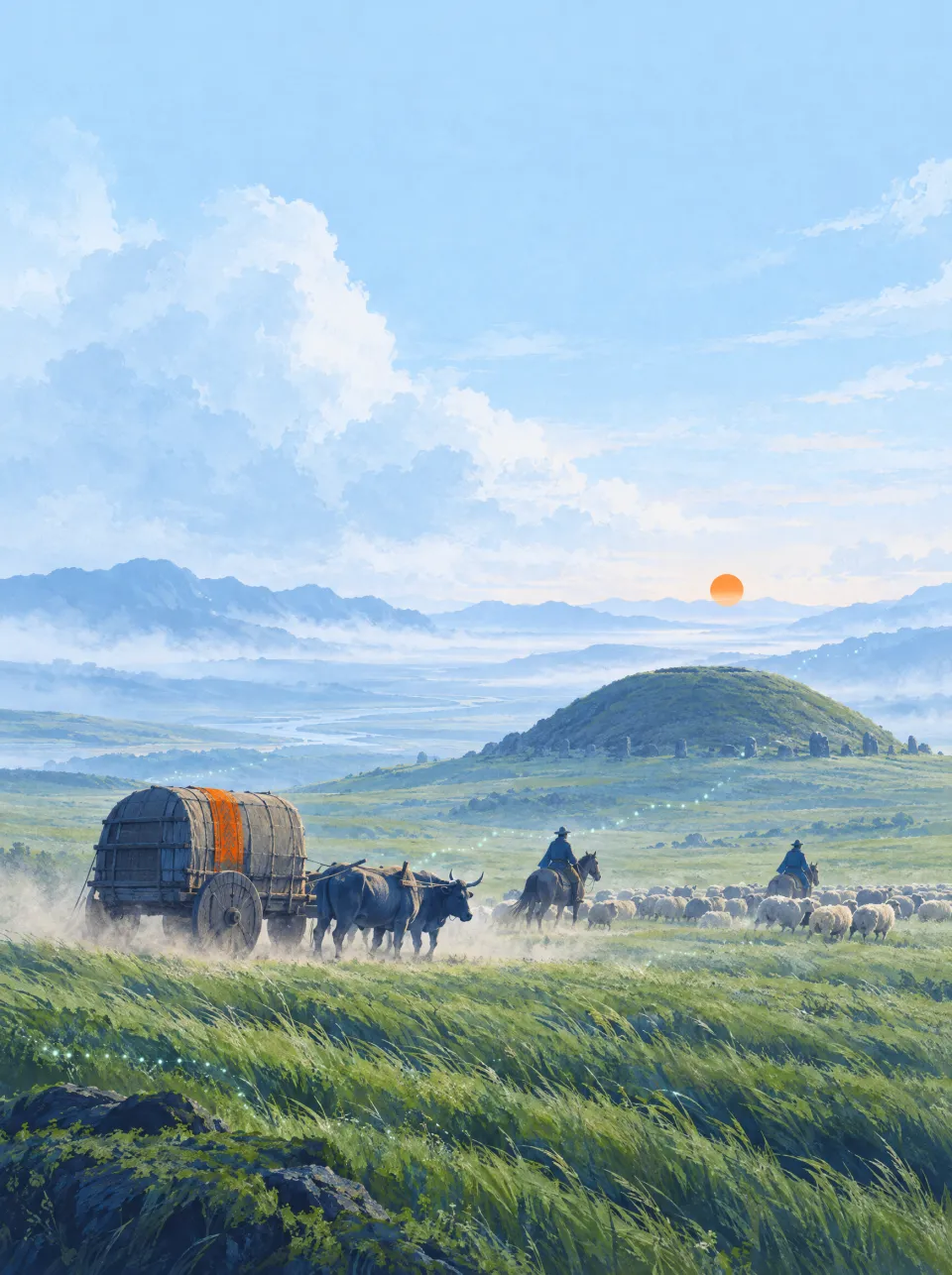
Present-day Europeans descend from several ancient groups that met and mixed over thousands of years. The Ancient DNA report compares your genotypes with reference panels built from published genomes of those groups.
The result is a layered picture: how much of your signal resembles Mesolithic hunter-gatherers, Neolithic farmers or Bronze Age steppe herders, and how it lines up with other ancient populations.
It also shows a few ancient signals for eye colour, skin tone and lactase.
Free: included with every DNA upload.
What this report looks at
- A 38-marker AIM panel with allele frequencies derived from published archaeogenomics.
- Eight ancient reference populations, including Western Hunter-Gatherer, Early European Farmer, Bronze Age Steppe (Yamnaya), Caucasus Hunter-Gatherer, Eastern Hunter-Gatherer and Natufian.
- Ancient East Asian and Ancient Sub-Saharan African references, which use proxies.
- Ancient phenotype signals at HERC2 (eyes), SLC24A5 (skin) and LCT (lactase).
- A three-wave model of European ancestry: hunter-gatherers, Anatolian farmers and steppe pastoralists.
How it works
Ancestry informative markers (AIMs) are DNA positions where the common allele differs between populations. Your genotypes at those positions are compared with panels built from published Mesolithic, Neolithic and Bronze Age genomes. Proportions are estimated with non-negative least squares, a standard way to fit a mix of reference populations to your genotypes. A residual unassigned component is reported when your data do not fit the panel well.
Coverage, shown as markers used out of panel size, is displayed with the result. The report also embeds short Viking and Italian heritage previews. GeneHealth works from the raw data file you already have from 23andMe, AncestryDNA, MyHeritage and other common providers.
Ancient reference groups are summaries of published genomes, not individual people. Your result is a mix of how similar you are to each group at the markers the panel reads.
What you get
- Your ancestors at the population level: ancient composition.
- Your hunter-gatherer, farmer and herder mix in the three-wave model.
- Pigmentation and dietary signals: eyes, skin and lactase.
- Embedded Viking-heritage and Italian-ancestry previews.
- Coverage and the residual unassigned share.
- A residual unassigned share for the part of your signal that fits no reference population.
Limitations
- Two of the reference populations are proxies: the Ancient East Asian panel, and the Ancient Sub-Saharan African panel, which uses modern Yoruba as its stand-in.
- With 38 markers the report shows broad patterns. It is not a whole-genome analysis.
- Affinity to an ancient group means shared genetic signal, not proof of descent from a particular people.
Sources
- Ancient human genomes suggest three ancestral populations for present-day Europeans. Nature, 2014. PubMed PMID 25230663.
- Massive migration from the steppe was a source for Indo-European languages in Europe. Nature, 2015. PubMed PMID 25731166.
- Genome-wide patterns of selection in 230 ancient Eurasians. Nature, 2015. PubMed PMID 26595274.
- Derived immune and ancestral pigmentation alleles in a 7,000-year-old Mesolithic European. Nature, 2014. PubMed PMID 24463515.
- Genomic insights into the origin of farming in the ancient Near East. Nature, 2016. PubMed PMID 27459054.
Frequently asked questions
Can this tell me if I am descended from Vikings or Romans?
It can show affinity with ancient reference groups. It cannot trace specific ancestors or confirm descent from any named people.
What is the three-wave model?
A simple framing of European ancestry as a mix of Mesolithic hunter-gatherers, Neolithic farmers from Anatolia and Bronze Age steppe herders.
What does the unassigned share mean?
It is the part of your signal that the panel could not fit to any of the reference populations.
Which file do I need?
Your raw data file from 23andMe, AncestryDNA, MyHeritage or similar. Coverage depends on which markers your test read.
What are Western Hunter-Gatherers?
Mesolithic foragers who lived in western Europe around 8000 BCE. They are one of the reference groups used in the panel.
Related guides
- AncestryDNA raw data analysis: what you can learn from your file: Your AncestryDNA kit produced a file of genotypes that you can download and use elsewhere. Here is what is inside, what outside analysis can honestly tell you, and what to check before you upload it. (7 min read, updated 21 November 2026)
- How to find your haplogroup from 23andMe raw data: Your 23andMe file can place you on two ancient family trees: one through your mother's line and one, for men, through your father's. Here is how it works and what the answer does and does not mean. (7 min read, updated 21 November 2026)
- Neanderthal DNA percentage: what the number means: Most people whose ancestors lived outside Africa carry a small share of Neanderthal DNA. Here is what that share is, why different tests give different numbers, and what a raw data report can honestly show. (7 min read, updated 21 November 2026)
- Viking DNA test: what it can honestly tell you: You cannot take a DNA test to find out whether you are a Viking. You can measure how closely your DNA resembles people who lived in the Viking Age. Here is what that means, and where the limits are. (7 min read, updated 21 November 2026)
Create a free account · Browse all DNA reports · How to download your raw DNA data